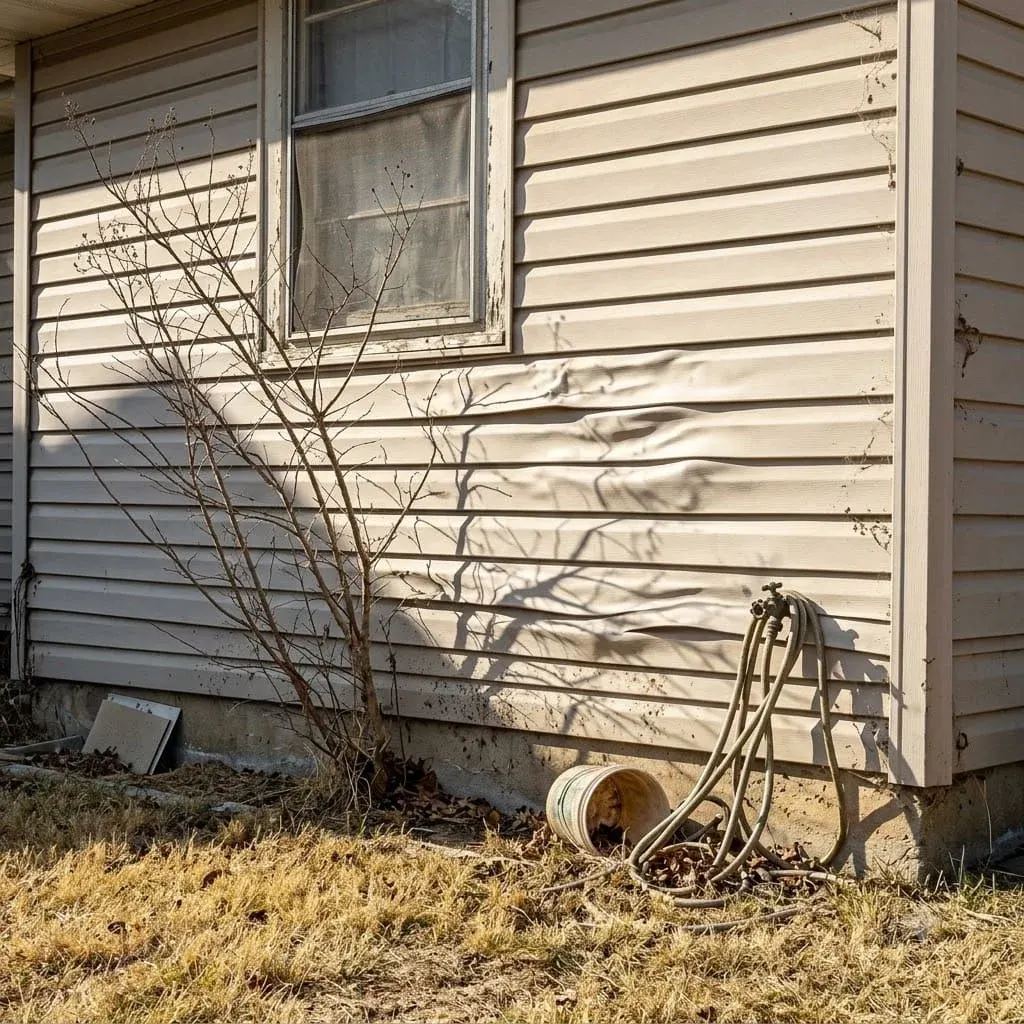
Vinyl siding moves with temperature, and the Polymeric Exterior Products Association says it can move 1/2 inch or more over a 12-foot-6-inch length. The Dallas/Fort Worth weather station records an average July high of 95.6°F and about 20 days a year at or above 100°F, so Fort Worth's heat puts that movement to work every summer. Panels that can move stay flat. Panels that can't, buckle.
The Short Answer
Vinyl works in Fort Worth when it is installed to move. The rules are simple and they come from the industry's own installation guidance: fasteners in the center of the nailing slot with room to slide, and clearance at trim, corners and openings. Siding that breaks those rules warps, buckles or cracks in the heat. We repair that, and we install it the right way.
The Fort Worth Numbers
Fort Worth's weather swings across the year. These are the Dallas/Fort Worth weather station's 1991 to 2020 normals from the National Weather Service:
| Measure | Normal |
|---|---|
| July average high / low | 95.6°F / 75.8°F |
| January average high / low | 56.5°F / 36.1°F |
| Days a year at or above 100°F | 20.2 |
| Days a year at or below 32°F | 29.2 |
| Precipitation | 37.01 inches a year |
Vinyl sits on the outside of the house and takes all of it.
What the Industry Says About Vinyl Movement
The Polymeric Exterior Products Association's installation guidance sets the numbers:
| Rule | Guidance |
|---|---|
| Panel movement | Can move 1/2 inch or more over a 12-foot-6-inch length |
| Fastener position | In the center of the nailing slot, not forced tight |
| Fastener clearance | About 1/32 inch under the head |
| Clearance at openings and stops | At least 1/4 inch |
| Clearance below 40°F | Increase to 3/8 inch |
Hot weather expands the panel into whatever room it was given. A panel with a tight fastener or no clearance at the trim has no room, so it buckles or bows.
How Heat Damages Vinyl Siding
- Buckling and waves. Panels fastened tight or butted hard against trim cannot expand and ripple.
- Gaps and pulled panels. In cold snaps, vinyl contracts and pulls away from trim, and a gap lets water in.
- Cracking. A panel under stress from tight fasteners splits where it can't move, and hail adds to it.
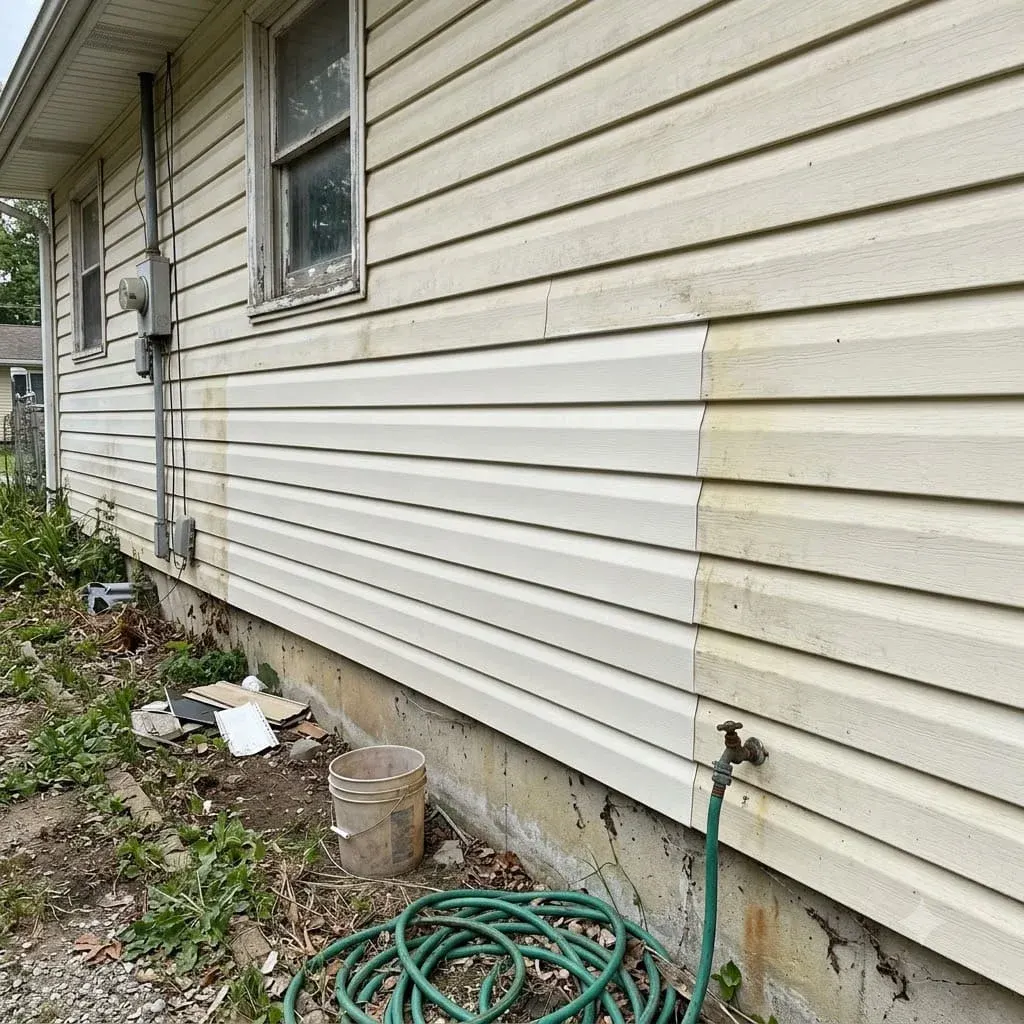
- Fading. Years of sun change the color, which matters when you need to match it. See matching siding color on an older Fort Worth home.
How We Repair and Install Vinyl for Texas Heat
First, we inspect the wall and find the tight fasteners, the missing clearance and the panels that have already buckled. Second, we unlock and replace the damaged panels. Third, we reset fasteners on the panels we touch so each one sits in the center of its slot with room to move. Finally, we check the clearance at the trim and openings. Vinyl siding repair covers the full method.
Frequently Asked Questions
Does vinyl siding hold up in Texas heat?
Vinyl siding works in Fort Worth when it is installed to move. The Polymeric Exterior Products Association says vinyl siding can move 1/2 inch or more over a 12-foot-6-inch length, and that fasteners belong in the center of the slot with clearance. Siding installed tight buckles in heat. We fix the fastening on the panels we repair.
Why is my vinyl siding wavy or buckled?
Buckled panels have no room to expand. Fasteners driven tight, or panels pushed hard against trim, hold the panel in place while heat pushes it out, and it ripples. We reset the fasteners and clearance on the buckled panels.
Will Texas heat fade my vinyl siding?
Years of sun change the color of siding, and Fort Worth gets about 20 days a year at or above 100°F. Fading matters when you repair, because new panels start at factory color. We compare panels in daylight and tell you what to expect.
Can I fix buckled vinyl siding myself?
A buckled panel points to tight fasteners or missing clearance, and fixing it means unlocking the panels above and resetting the fasteners. Doing it wrong leaves the buckle. We inspect it for free and tell you what the wall needs.
How much does it cost to repair buckled vinyl siding?
A national cost guide puts vinyl siding repair at $100 to $300 per 10-foot by 10-foot section. That's a national average, not a Fort Worth quote. The number of panels, the wall height and the condition behind them set the price, and an inspection gives the number.