Water that gets behind siding soaks the sheathing and trim and rots them from the inside, and the siding can look fine until the wall is soft. The Dallas/Fort Worth weather station records about 37 inches of precipitation a year, and a loose panel, a gap at a window or a cracked corner lets that water in. Here's how to spot it and what the repair involves.
The Short Answer
Siding sheds water, but it is not watertight. Water behind it is meant to run down a weather barrier and out the bottom. When a panel cracks, a corner pulls away or flashing fails, the water goes into the wall and stays. Rot is repaired by removing the siding, replacing the soft wood, fixing what let the water in, and putting the siding back.
Signs of Moisture Behind Siding
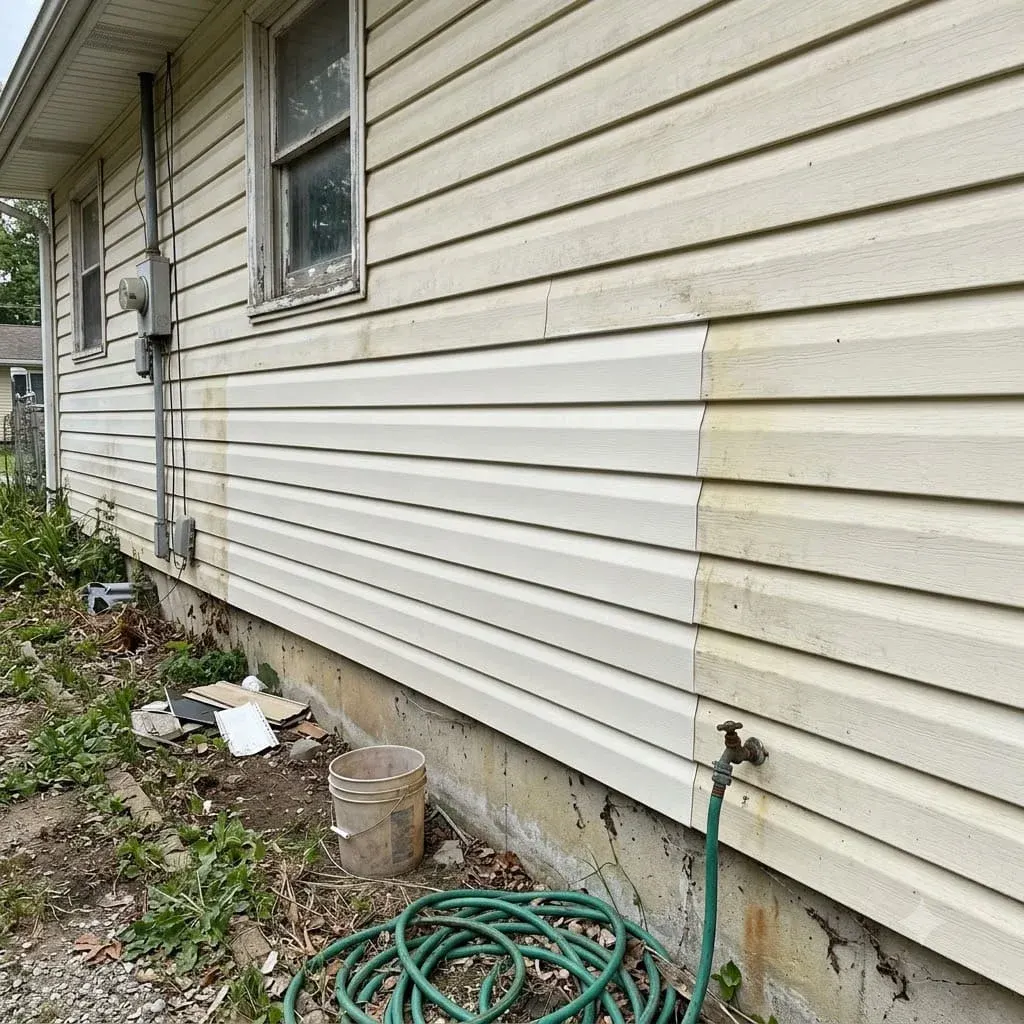
Look for these on the siding, the trim and the wall:
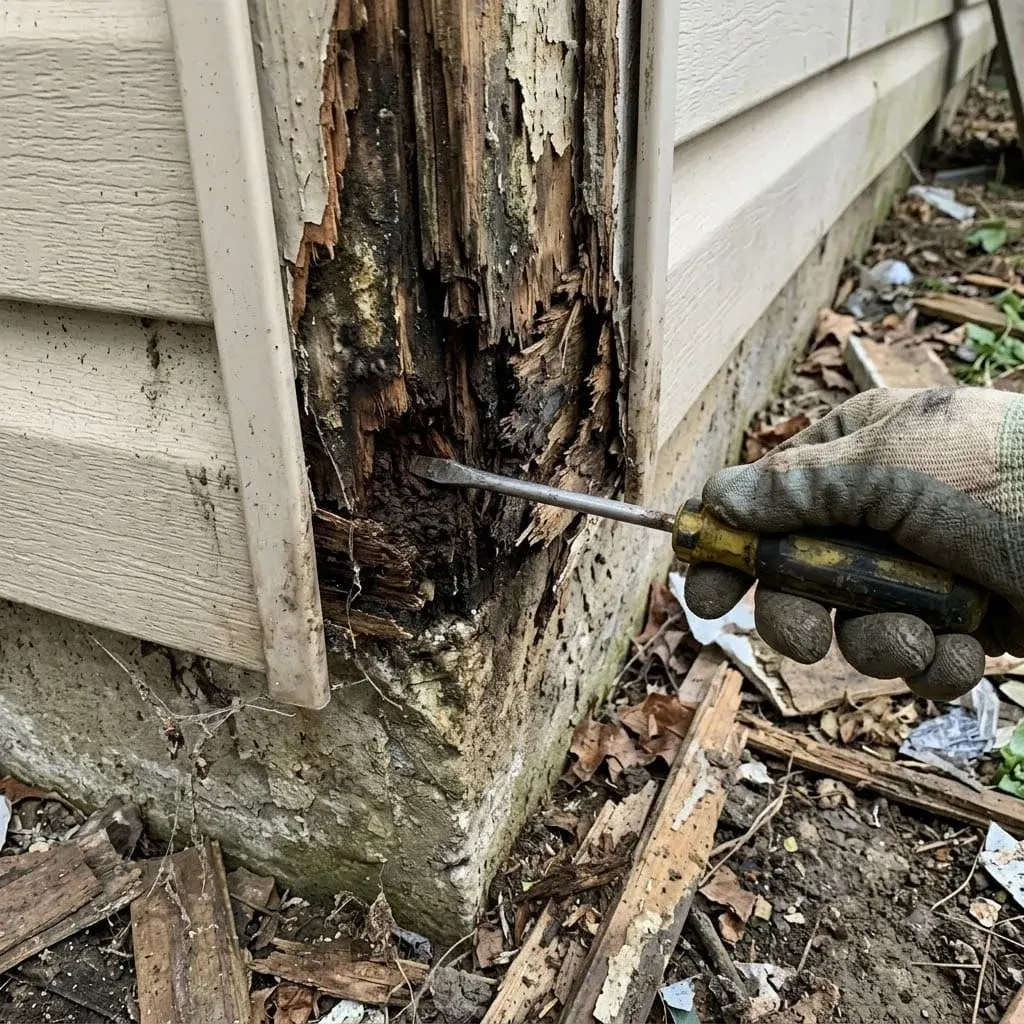
- Soft, spongy or stained wood at trim, corners and the bottom of the wall
- Paint peeling on wood trim
- Mold or mildew on siding or trim
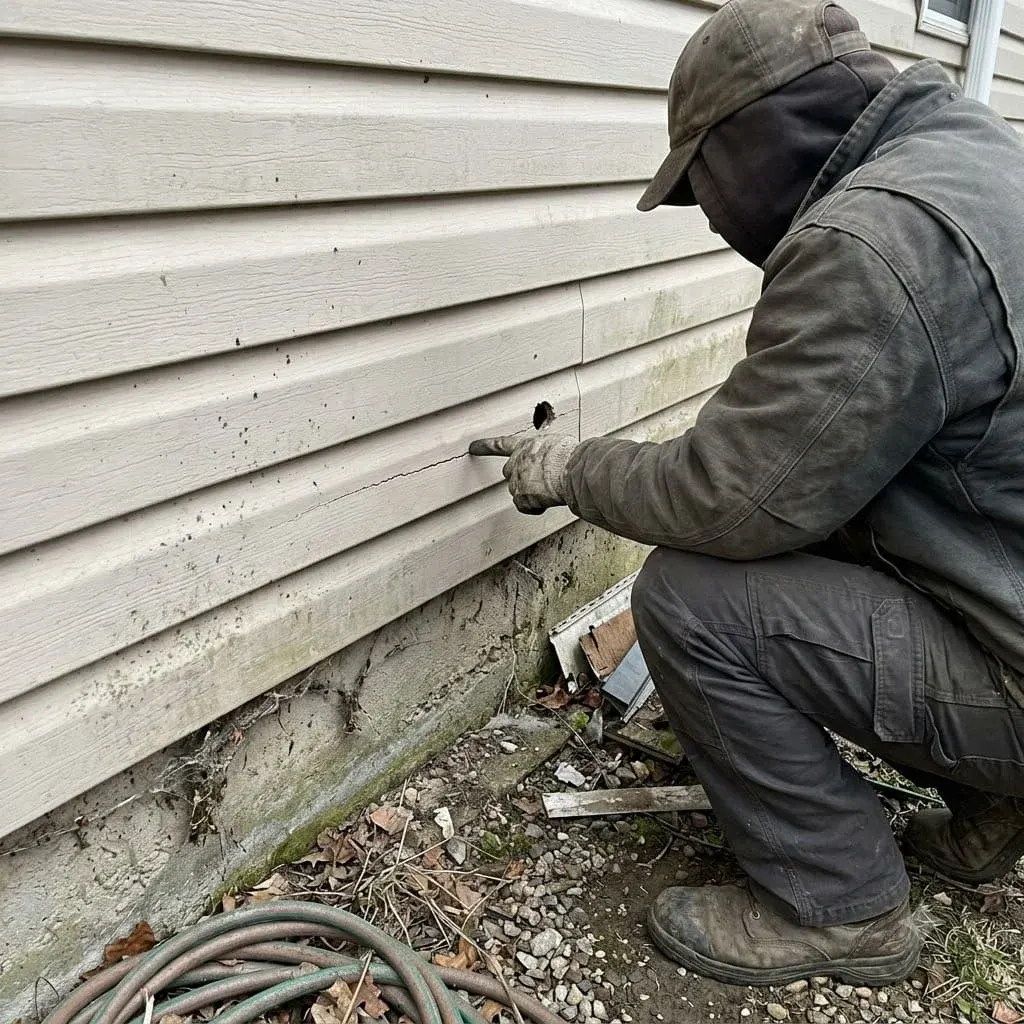
- Siding that is warped, buckled or loose with no clear cause
- Gaps at windows, doors and corners
- A musty smell inside at an exterior wall
One sign on one wall is a repair. Several signs on the same wall mean water has probably been getting in for a while.
How Water Gets Behind Siding in Fort Worth
Rain comes in bursts. The Dallas/Fort Worth weather station records May as the wettest month at 4.78 inches, with October next at 4.37 inches. Wind-driven rain finds the weak points:
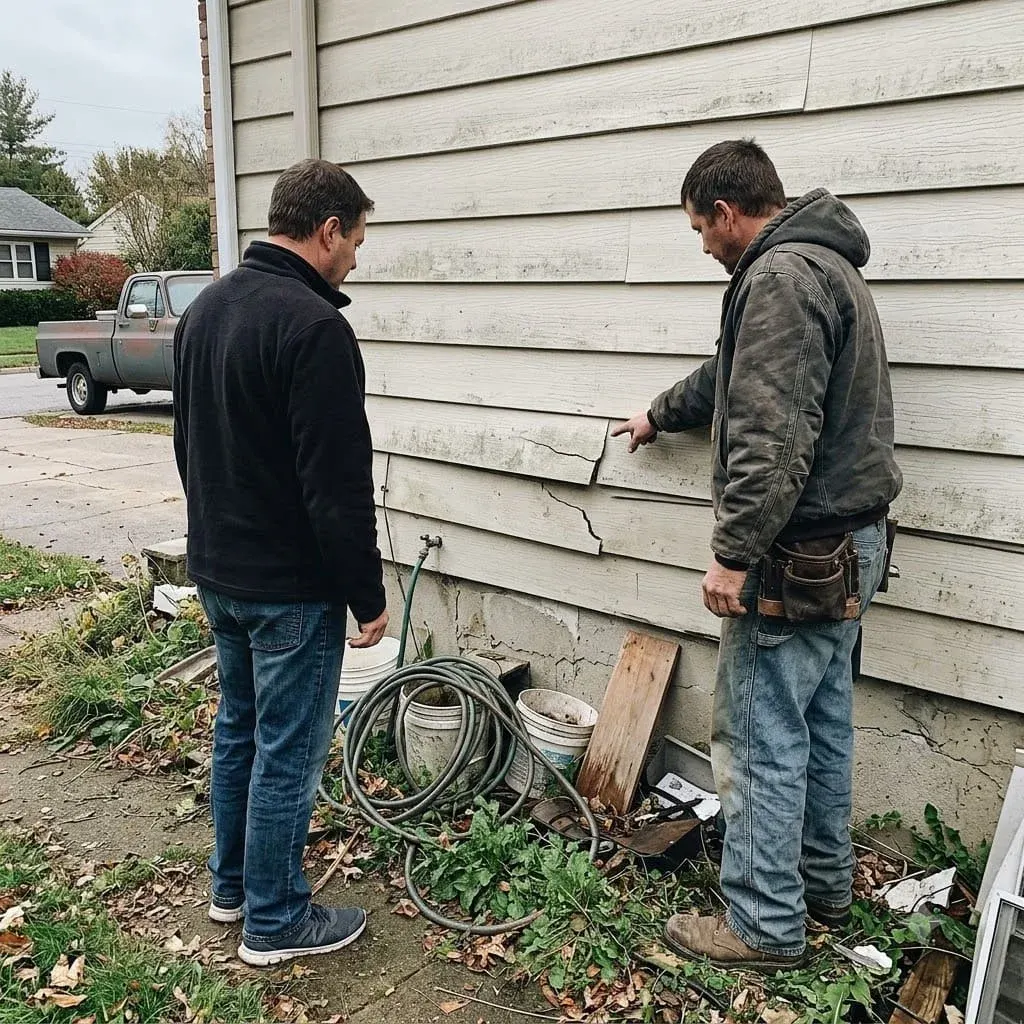
- Cracked or holed panels
- Corners and trim that have pulled away
- Gaps and failed flashing at windows and doors
- Panels left loose after an earlier repair
- Hail damage that cracked panels and was never fixed
Hail-damaged siding repair covers storm damage in particular.
How We Repair Rot Behind Siding
First, we find the source. The damage you can see sits below the leak, so we trace the water up to where it got in. Second, we remove the siding over the damaged area and probe the wood behind it. Third, we cut out soft sheathing and trim and replace it. Fourth, we repair the flashing and weather barrier, and fix whatever let the water in, whether that's a panel, a corner or a joint. Finally, we install the siding with room to move and seal the edges.
Fixing the surface without finding the source leaves the leak. We don't close a wall over wet wood.
What Moisture Damage Costs
National cost guides put dry rot repair at about $100 to $2,000 and mold remediation at about $1,150 to $3,400, according to This Old House's 2026 guide. A siding repair on top of that runs about $100 to $300 per 10-foot by 10-foot section, according to Fixr. Those are national averages, not Fort Worth quotes. The size of the rot decides the price, and we find that when the siding comes off. What siding repair costs in Fort Worth lists each range.
Frequently Asked Questions
How do I know if there is rot behind my siding?
Look for soft or stained wood at corners, trim and the bottom of the wall, peeling paint on trim, mold on the siding, warped or loose panels, and gaps at windows. We probe the wood behind damaged siding during the inspection and show you what we find.
Can you repair rotted sheathing without replacing all the siding?
Yes, when the rot is limited. We remove the siding over the damaged area, replace the sheathing and trim, and put the siding back or replace those panels. When rot is widespread, replacement of the wall can cost less than repeated repairs. Siding repair vs replacement in Fort Worth shows how we weigh it.
What causes water to get behind siding?
Cracked or holed panels, loose corners and trim, failed flashing at windows and doors, and unrepaired hail damage let water behind siding. The Dallas/Fort Worth weather station records about 37 inches of precipitation a year, so water has plenty of chances to find the gap.
How much does it cost to repair rot behind siding?
National cost guides put dry rot repair at about $100 to $2,000 and mold remediation at about $1,150 to $3,400, before the siding work. Those are national averages, not Fort Worth quotes. The size of the damage decides the price, and we see it when the siding comes off.
Do I need a permit to repair decayed siding in Fort Worth?
Replacing decayed siding in Fort Worth needs a building permit, according to the city's Development Services guidance. We confirm what applies to your address before work starts.