Fort Worth & Tarrant County, TX

Siding Repair in Fort Worth, TX for Cracked, Warped and Storm-Damaged Siding

This site connects Fort Worth homeowners with local siding repair contractors, in a city where the Dallas/Fort Worth weather station records about 20 days a year at or above 100°F and about 37 inches of precipitation a year. Heat warps and fades vinyl, spring storms crack and dent panels, and water that gets behind a loose panel rots the wall underneath. Call 817-533-6788 to be connected with a local provider.

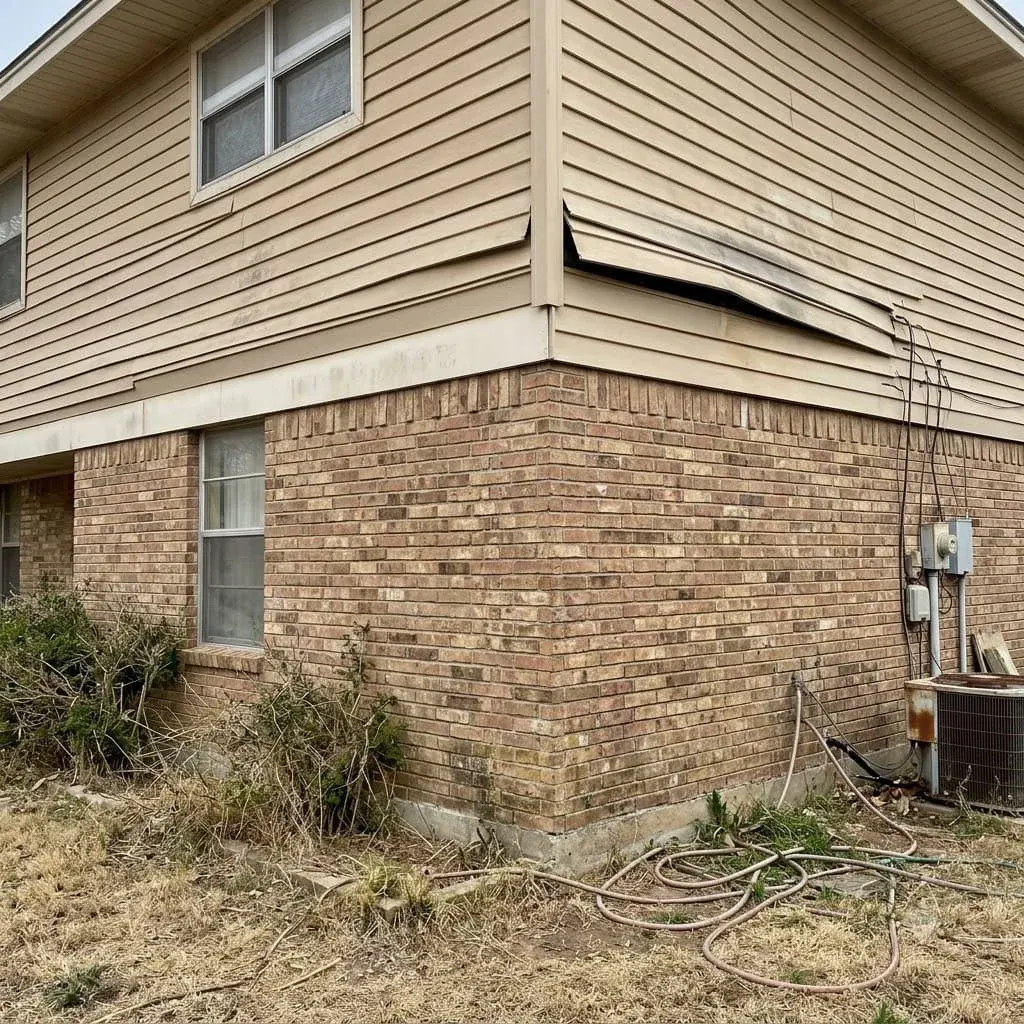
Vinyl siding wall with a cracked panel on a North Texas house
Independent local prosWritten price before any work begins

Most siding repairs are small. A cracked panel, a section that came loose, a hole from a stray ball or a hailstone, or a corner that pulled away from the trim can be fixed without replacing the wall. A siding contractor repairs the damaged section, matches the siding already on the house, and seals the area so water stays out.

What is covered

Siding Repair Services in Fort Worth

Siding fails in a few different ways, and the repair follows what is wrong and what the wall is made of.

Cracked and broken vinyl siding repair in Fort Worth

A contractor cuts out the damaged panel, fits a new one to the same profile and color family, and locks it into the run so it sits flat. Small cracks and holes can be patched or filled when the panel is otherwise sound. Vinyl siding repair

Damaged siding sections and full wall replacement

When damage spreads across a wall, or the siding is too faded or brittle to repair, the section or the wall gets replaced. Replacement also covers homes where the original siding is no longer made. Siding replacement

Hail and storm damage siding repair

Hail leaves dents, chips and cracks, and wind pulls panels loose. A contractor inspects the full exterior, marks every damaged panel, and repairs or replaces what the storm hit. Hail-damaged siding repair

Trim, soffit edges, and rot behind siding

Loose corner trim, gaps at windows and rotted boards behind siding are part of the same repair, because water follows the weak point. The bad boards get replaced and the joints flashed before new siding goes back on.

Work is performed by independent professionals. A siding project normally starts with an inspection and a written price before any work begins.

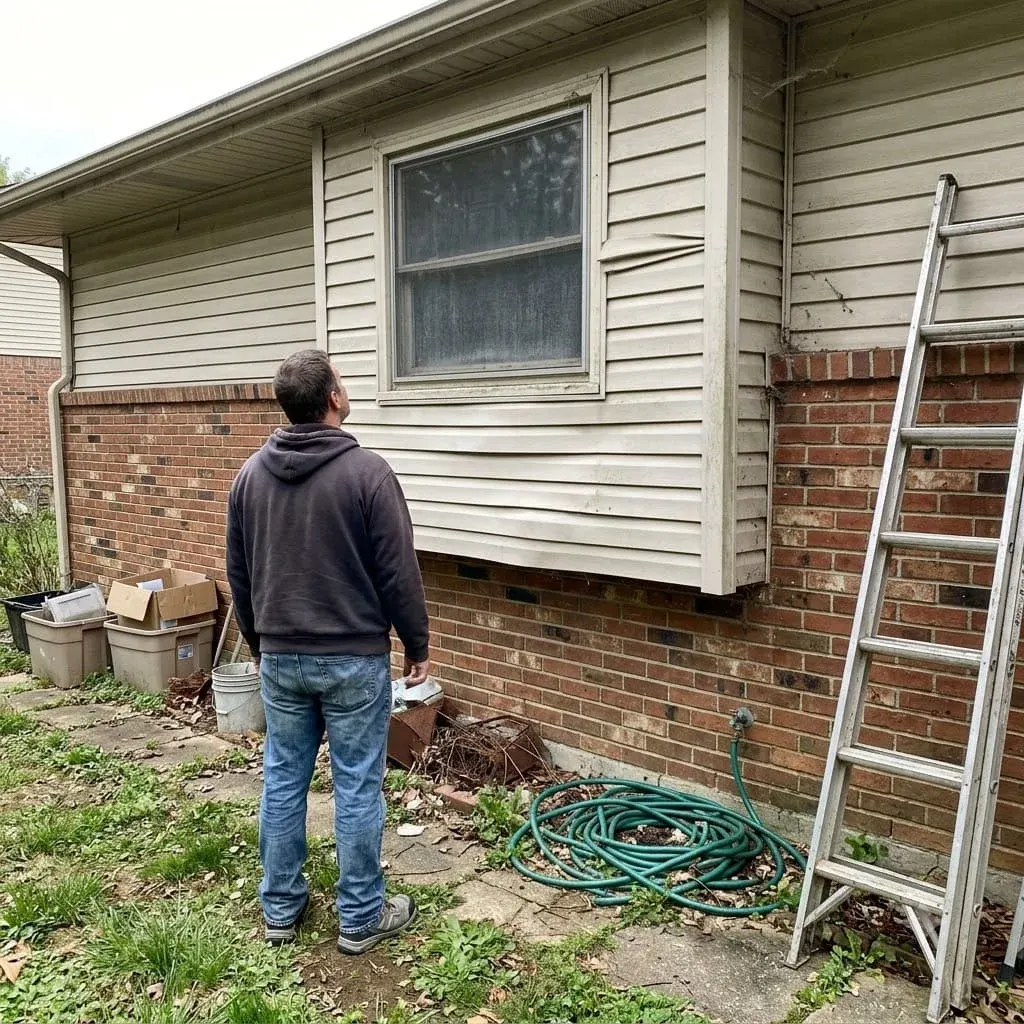
Damaged siding section with a ladder and a homeowner looking at it
Fort Worth weather

Why Fort Worth Siding Takes a Beating

Fort Worth weather works on siding all year. The Dallas/Fort Worth weather station records an average July high of 95.6°F and about 20 days a year at or above 100°F, and about 29 days a year when the low drops to 32°F or below. Vinyl expands in the heat and contracts in the cold, so panels that are nailed too tight buckle, and old panels turn brittle and crack.

Rain arrives in bursts. The station records about 37 inches of precipitation a year, with May the wettest month at 4.78 inches and October next at 4.37 inches. Wind-driven rain finds gaps at corners, window trim and the bottom edge of panels, and a small gap lets water into the wall.

Fort Worth housing is both new and old. Census 2024 American Community Survey figures show about 49% of occupied homes were built in 2000 or later, and about 31% were built before 1980, including about 14% between 1940 and 1959 and about 12% between 1960 and 1979. About 68% of occupied homes are single-family detached houses, so the siding is the home's main protection from the weather. Siding that has hung on a wall for decades has been through the most heat cycles, and it is the siding most likely to be brittle, faded or no longer made.

What to look for

Signs You Need Siding Repair

Siding damage tends to show early if you walk the house. Look for:

  • Cracked, split or chipped panels
  • Panels that are loose, wavy or buckled
  • Holes from hail, impact or pests
  • Faded, chalky or discolored sections
  • Gaps at corners, windows and doors
  • Soft, spongy or stained wood under or behind siding
  • Mold or mildew on siding or trim
  • Paint peeling on wood or fiber-cement siding

One cracked panel is a quick repair. Several signs on the same wall mean water has probably reached the sheathing, and tracing it early keeps the repair small.

Choosing a contractor

What to Look For in a Siding Contractor

  • Repairs sized to the damage. A good contractor repairs what is damaged and replaces only what cannot be repaired.
  • Matching siding. Ask whether the profile, color family and sheen of the siding already on the house can be matched, and how closely.
  • A written scope before work. Look for an inspection and a written price, so the scope is settled before anything is decided.
  • Prices set before work. The written price should be the price, with nothing added after.
  • Water stopped at the source. Every joint that is opened should be flashed and sealed, so the repair keeps water out.
  • License and insurance. Ask for proof of both, and confirm the coverage fits the work being performed.
How it works

How a Siding Repair Job Works

First, a contractor inspects the siding on every wall and marks the damage, including trim and what sits behind the panels.

Second, they write up a plan and a price for the repair or replacement the house needs.

Third, the installers do the work.

Finally, they walk the finished wall, check the seams and seal the edges before the job is called done.

Permit rules are set by the city or town where the house sits, so confirm what applies to the address before work starts.

Second opinion

Already Have a Quote?

If a company has already given you a price, call 817-533-6788 to be connected with a local provider who can inspect the same house and put a plan in writing, so the two can be compared side by side to see whether the scope fits the damage.

Comparing quotes

What a Good Siding Quote Includes

Two quotes mean something only when they describe the same work, so compare them on these points:

  • The scope. It lists which walls and how many panels or square feet are repaired or replaced.
  • The material. It names the siding type, profile and color, and says how closely it matches what is on the house.
  • The repair of what is behind it. It says what happens to damaged sheathing, trim or flashing.
  • The disposal. It says who removes the old material.
  • The warranty. It lists in writing what is covered, for how long and what voids it.
  • The permit. It says who handles any permit the job needs.

A written plan from a qualified contractor covers each of these before work begins.

Service area

Service Areas Around Fort Worth

Local providers repair siding in Fort Worth and across Tarrant County. See the full service area

Frequently asked

Frequently Asked Questions

Can cracked or damaged siding be repaired instead of replaced?

Yes, in most cases. A cracked panel, a loose section or a small hole can be repaired or replaced without touching the rest of the wall. Replacement makes sense when damage covers much of a wall, the siding is brittle or badly faded, or water has damaged the wall underneath. An inspection settles which one the house needs. Siding repair vs replacement

Can a contractor match my existing siding?

Contractors match the profile, color family and sheen as closely as the product allows. Older siding that has faded in Texas sun can look different from new panels, and discontinued profiles may have no exact match. When a close match is not available, a good contractor says so before work starts, and the option is to repair from the least visible wall or replace the whole wall so it looks uniform.

Does homeowners insurance cover siding damage?

Coverage differs from policy to policy, so read the policy and ask the insurer whether wind and hail damage to siding is covered and what the deductible is before filing. Keep dated photos of the damage and get a written repair estimate for the claim. Contractors typically write up the damaged panels and the repair scope so the insurer sees exactly what the repair involves.

Do I need a permit for siding repair in Fort Worth?

The City of Fort Worth Development Services guidance for residential building permits states that replacement of missing or decayed siding requires a building permit, and the city residential remodel packet asks applicants to indicate where siding is being replaced. Minor repairs are not addressed in that guidance, and homes outside Fort Worth city limits fall under their own city rules. A local contractor can confirm what applies to the specific work and address before it starts.

Can one siding panel be replaced without removing the whole wall?

Yes. Vinyl panels lock into the panel above, so a contractor unlocks the course above with a zip tool, removes the damaged panel, fits the new one and relocks the run. That avoids pulling the wall apart. Panels at the corners and under windows take more work, and the nail heads of a repaired board can end up visible when the overlap cannot hide them. Ask what will show before the work starts. How to repair vinyl siding at a corner

Call Now

For siding repair in Fort Worth, call 817-533-6788 to be connected with a local provider. You can also reach a provider here.

Call 817-533-6788
Call Now