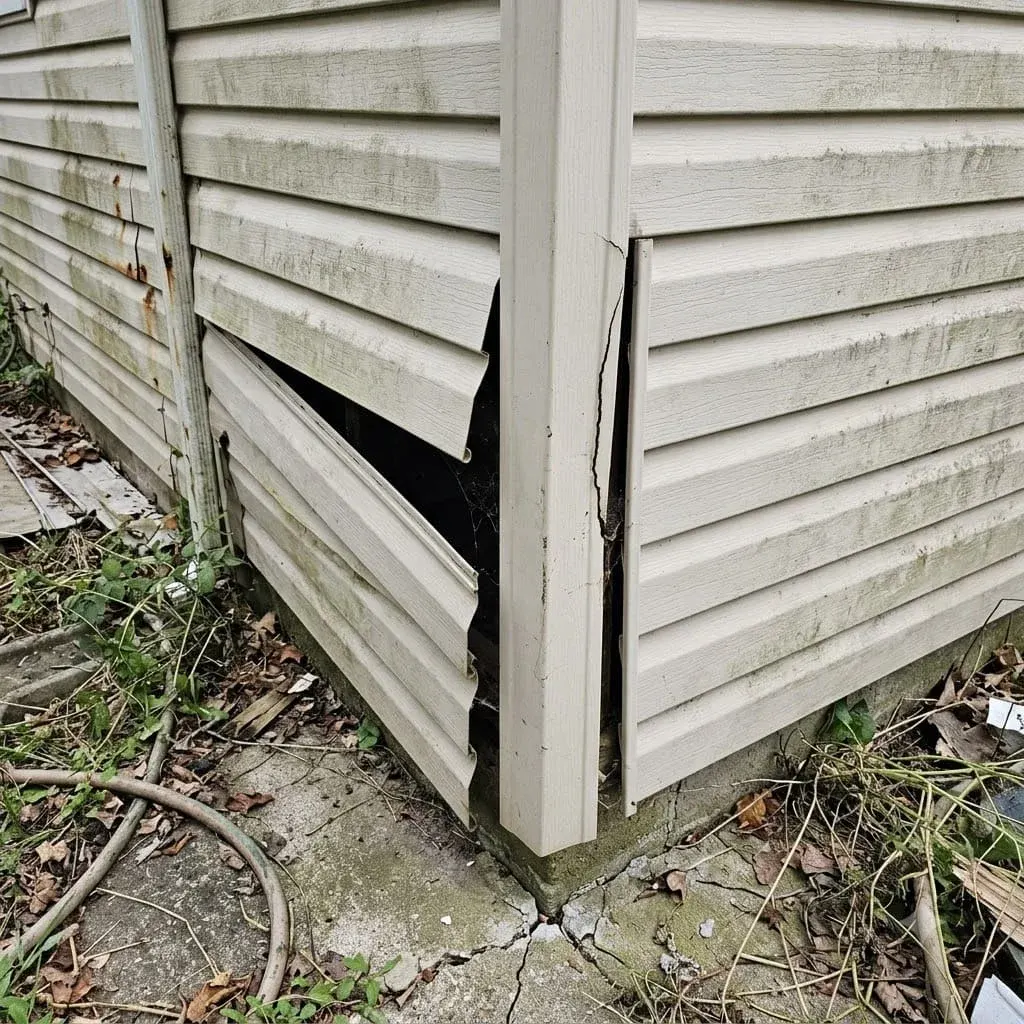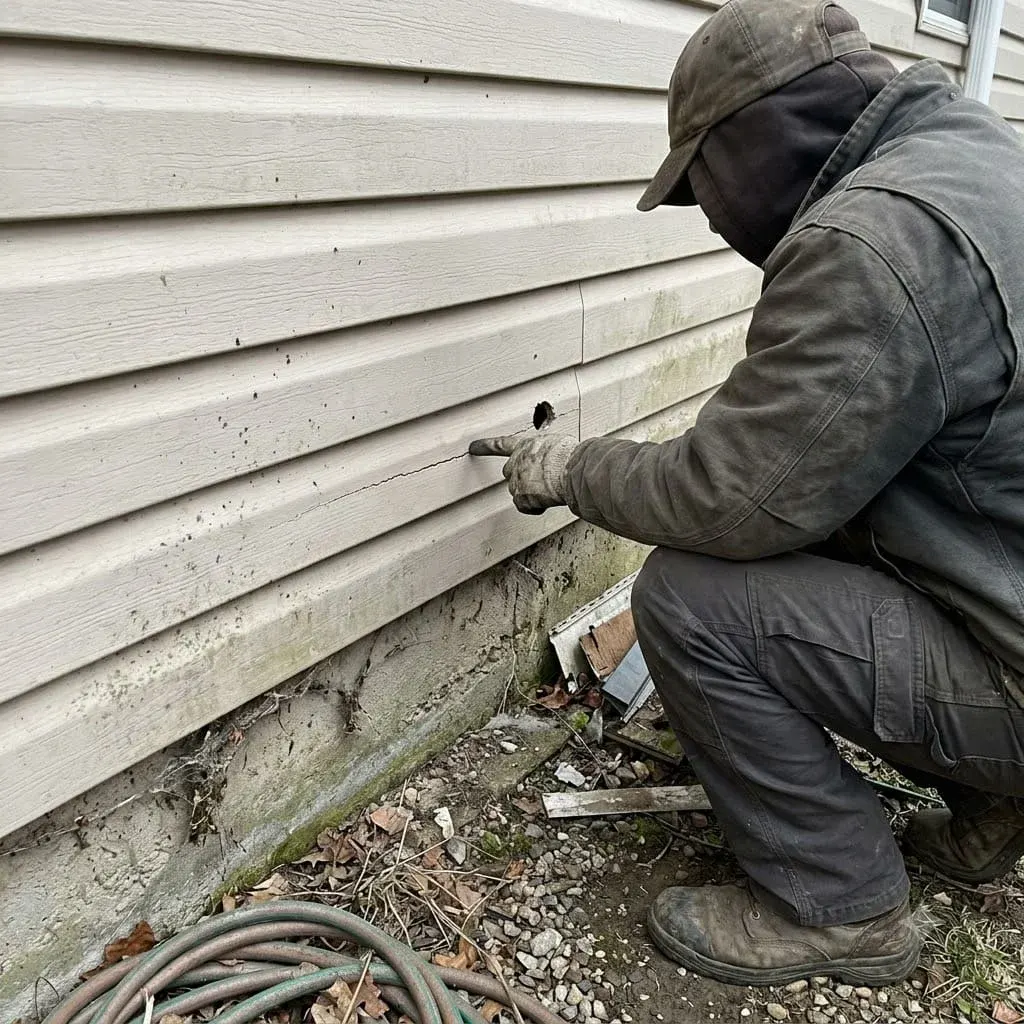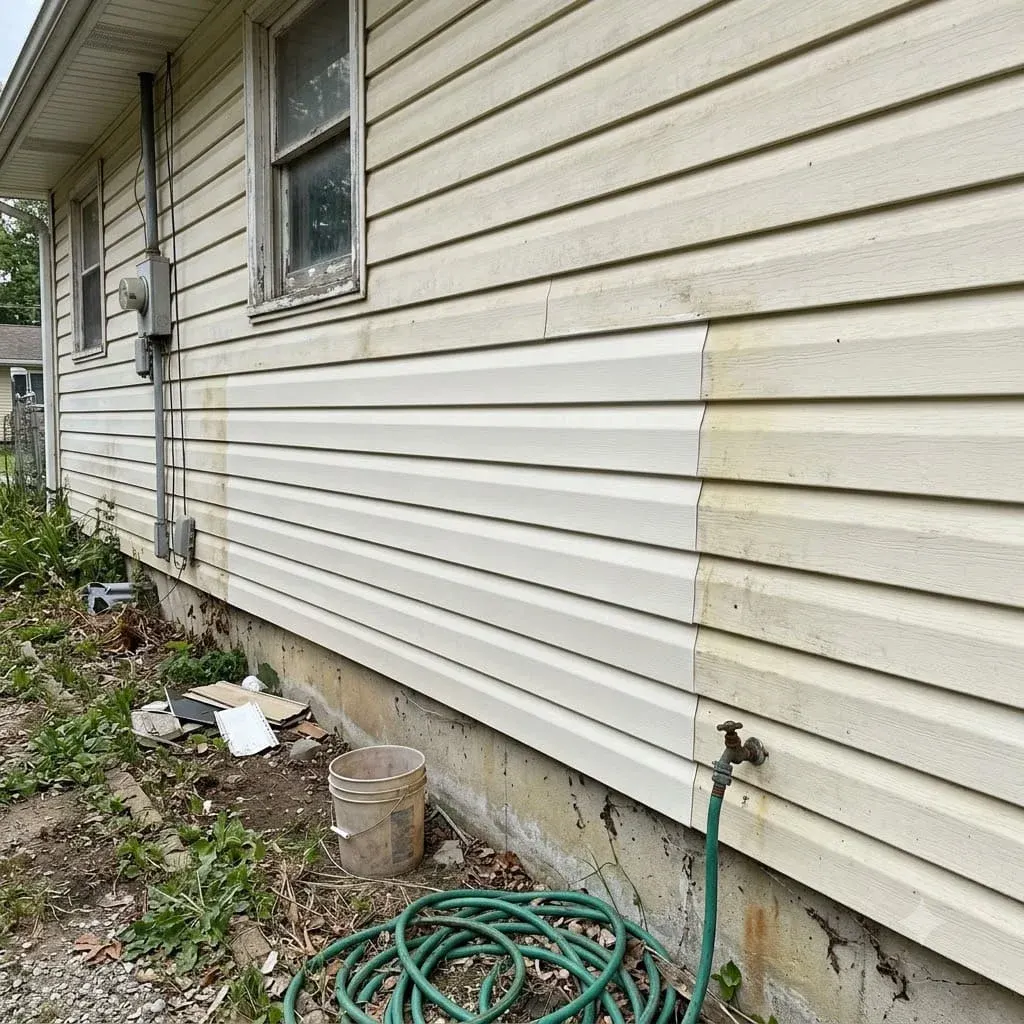
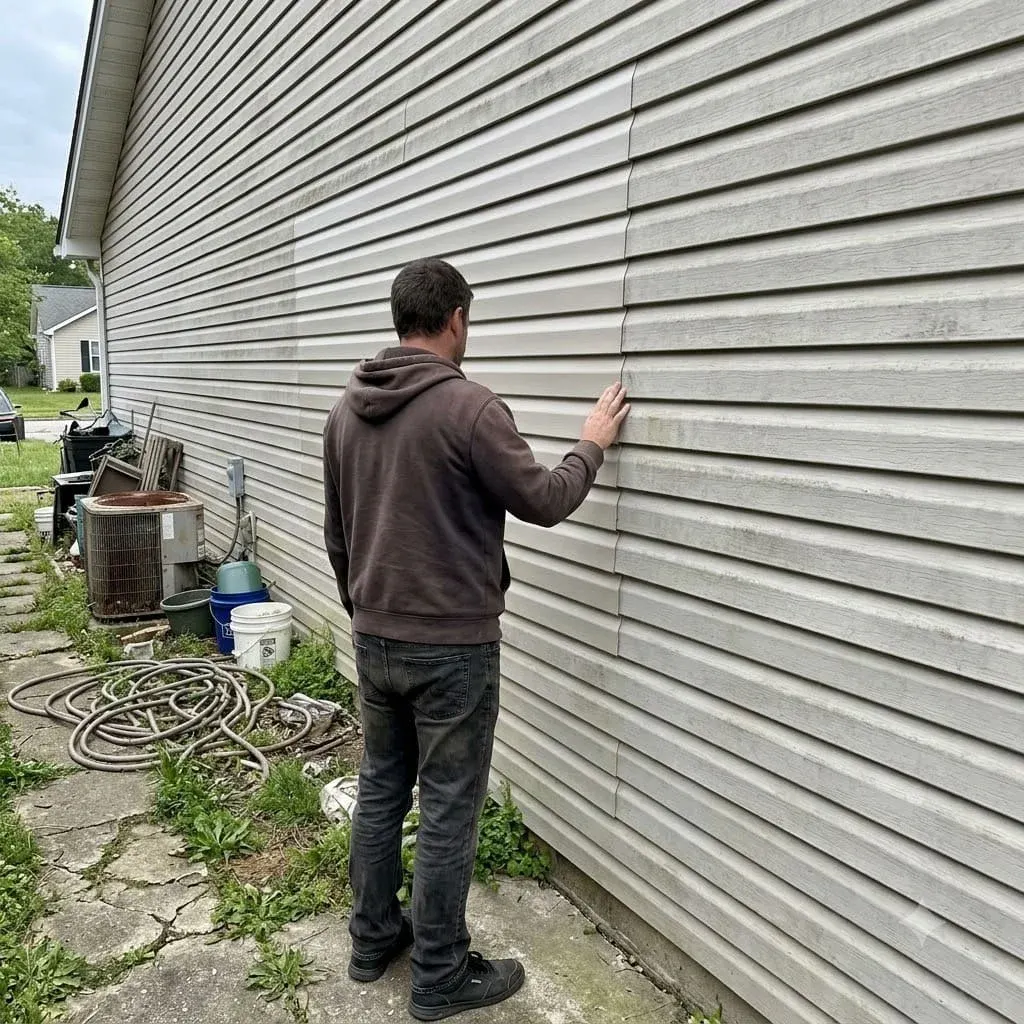
Repair is the right call when a few panels are damaged and the wall behind them is dry, and replacement is the right call when damage covers most of a wall or water has reached the sheathing. Here is how contractors make that call, wall by wall.
The Short Answer
First, count the damage. A few cracked, holed or loose panels are a repair. Second, check what is behind it. Dry sheathing means the repair holds, and soft or stained sheathing means water has been getting in. Third, look at the age and condition of the siding. Brittle, chalky or badly faded siding fails again after a repair. Finally, think about the match. A repair can leave a shade difference next to old siding, and a full wall does not.
Side by Side
| Repair | Replacement | |
|---|---|---|
| Best for | A few damaged panels, a loose section, a damaged corner | Damage across most of a wall, brittle or faded siding, wet wall behind |
| What the work involves | Unlock the panels above, replace the damaged panels, fix what is wet behind them | Remove the old siding, repair the wall, flash, install new siding and trim |
| Match | Close, but older siding can sit a shade apart | Uniform across the wall |
| Permit | Minor repairs are not addressed in Fort Worth guidance; a contractor confirms | Replacement of missing or decayed siding requires a permit in Fort Worth |
When Repair Is Enough
A repair holds when the damage is limited and the wall is sound. A contractor replaces a cracked panel by unlocking the course above with a zip tool, which leaves the rest of the wall in place. Small cracks and holes in a panel that is otherwise flat can be filled. A corner piece that has pulled loose is a repair too. Vinyl siding repair covers the method, and how to fix cracked vinyl siding shows where a patch ends and a panel begins.
When Replacement Is the Better Call
Replacement fits when repair would chase damage that keeps spreading:
- Damage covers much of a wall
- The siding is brittle, chalky or faded past matching
- The profile or color is no longer made
- The sheathing behind is soft, stained or rotted
- The same wall has been repaired before and keeps failing
Water behind siding is the deciding factor. Rot and moisture behind siding in North Texas explains what a contractor looks for. Siding replacement covers the materials and the process.
Fort Worth Homes and the Decision
The age of the house changes the odds. The Census Bureau 2024 American Community Survey shows about 31% of Fort Worth occupied homes were built before 1980, including about 14% between 1940 and 1959 and about 12% between 1960 and 1979. Siding that old has been through decades of heat. The Dallas/Fort Worth weather station records about 20 days a year at or above 100°F. Brittle panels crack easily, and an old profile may have no match. About 49% of occupied homes were built in 2000 or later, and newer siding is easier to match. Homes built before 1980 may also need asbestos testing before old siding comes off.
How the Call Gets Made
A contractor inspects every wall, probes the sheathing behind damaged panels, and scopes both options when the call is close. Getting the repair scope and the replacement scope in writing is what lets you compare them.
Frequently Asked Questions
How do I know if I should repair or replace my siding?
Repair fits a few damaged panels on a wall that is dry and sound behind. Replace when damage covers most of a wall, the siding is brittle or faded past matching, or water has reached the sheathing. An inspection settles it, and a good contractor scopes both when the call is close.
Can I replace just the damaged panels?
Yes. Vinyl panels lock into the panel above, so a contractor unlocks the course above, replaces the damaged panels and locks the upper panel back over them. The wall stays in place. If the old siding has faded, the new panels can sit a shade apart, and a good contractor says so before starting.
Is it worth replacing 20-year-old siding?
Age alone is not the test. Condition is. Siding that is flat, solid and not brittle can stay, and siding that is cracking in several places, chalking or fading past matching is a replacement. An inspection of the wall settles which one it is.
Does replacing one wall look different from the rest of the house?
It can. A replaced wall is uniform within itself, but it sits next to walls whose siding has faded in the sun for years. Ask the contractor to compare a new panel against the existing wall in daylight before the order goes in. Matching siding color on an older Fort Worth home covers the options.
Do I need a permit to repair or replace siding in Fort Worth?
The City of Fort Worth Development Services guidance states that replacement of missing or decayed siding requires a building permit. Minor repairs are not addressed in that guidance. A local contractor confirms what applies to the address before work starts.